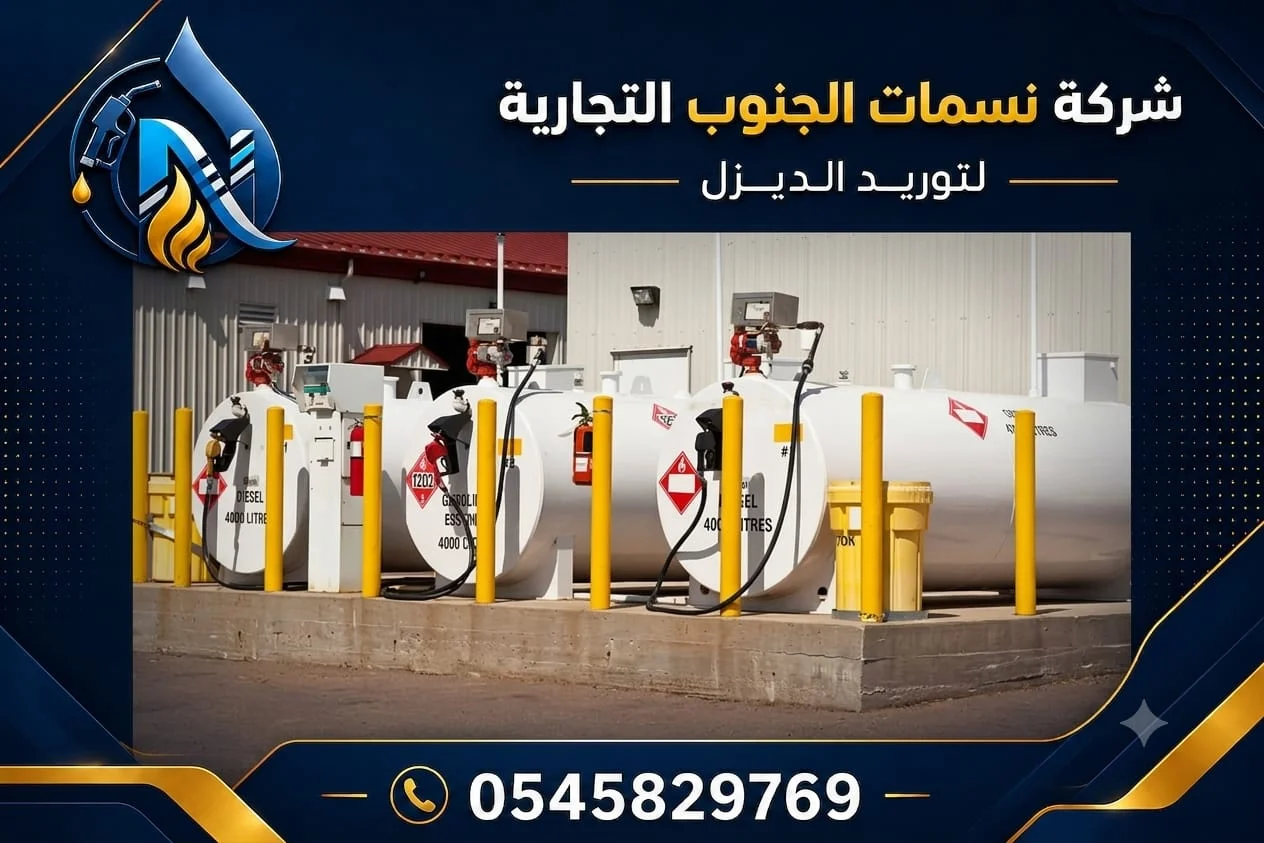
Best Continuous Supply Solutions for Projects
Continuous supply is one of the most important factors that helps projects and companies maintain smooth operations without interruptions, especially in industries that depend on generators, heavy equipment, and machinery requiring daily diesel supply. Any delay in fuel availability can lead to operational disruptions, increased costs, and delays in project completion stages. Therefore, companies are increasingly looking for diesel supply solutions that guarantee fuel delivery at the right time according to a clear and organized plan. Based on practical experience in fuel supply services for projects, successful supply operations do not depend only on having the required quantities available, but also require a supplier capable of monitoring requirements, responding quickly, and understanding the nature of the business. Choosing the right continuous supply system is therefore a strategic step that helps projects and factories achieve greater stability and reduce operational risks caused by fuel shortages.
Continuous Supply

Continuous supply is an organized system designed to provide companies and projects with their fuel requirements regularly according to a specific schedule that matches operating conditions and consumption levels.
Based on practical experience, projects that cannot afford equipment downtime depend on this system because it reduces reliance on urgent fuel requests that may cause work delays.
Successful continuous supply begins with studying project requirements, identifying daily or weekly consumption rates, and creating a suitable delivery plan.
This system also helps improve inventory management because the company knows in advance fuel delivery dates and expected quantities.
One of the main advantages of continuous supply is that it gives project management greater planning ability and reduces the possibility of work stoppages caused by diesel shortages.
However, the supplier must be carefully selected and have the capability to maintain the agreed schedule because service continuity depends greatly on execution quality.
Continuous communication between the customer and supplier also helps adjust the supply plan when project workload or fuel requirements change.
Real-world experience confirms that continuous supply is not simply a fuel delivery process, but an integrated system that protects operational continuity.
• Providing fuel according to a clear schedule.
• Reducing interruption risks.
• Improving inventory management.
• Supporting operational planning.
• Ensuring supply stability.
Continuous Diesel Supply
Continuous diesel supply helps companies and projects guarantee the availability of fuel required to operate equipment and generators without the need to search for a new supplier every time.
Based on practical experience, sites operating for long hours require a regular supply system because any diesel shortage may stop essential equipment and delay project activities.
Continuous supply depends on understanding actual consumption rates and creating a delivery schedule that matches site requirements.
This system also helps reduce pressure on purchasing and operation teams because fuel deliveries are planned in advance.
The supplier must be capable of providing the required quantities on time, especially for large projects using multiple machines simultaneously.
The supplier should also have suitable transportation resources and a monitoring system that ensures efficient delivery operations.
Real-world experience confirms that continuous diesel supply gives companies greater confidence in managing operations and reduces risks associated with fuel shortages.
• Suitable for large projects.
• Supports daily operations.
• Reduces urgent requests.
• Helps organize expenses.
• Provides supply stability.
Fuel Supply for Projects

Fuel supply for projects requires a carefully planned process that varies according to project nature, equipment volume, and daily operating hours.
Based on practical experience, the requirements of a large construction project differ from a small project, so one supply plan cannot be applied to all situations.
Required fuel quantities should be determined based on the number of machines used, equipment types, and project execution stages.
Advance planning helps prevent sudden shortages that may affect the project schedule.
Coordination between project management and fuel suppliers is important to identify any changes in consumption before they affect operations.
Fuel supply can also be divided according to project stages to ensure suitable quantities are delivered at the right time.
Real-world experience confirms that organized project fuel supply helps reduce delays and improve the use of available resources.
• Studying project requirements.
• Determining fuel quantities.
• Organizing delivery schedules.
• Monitoring consumption changes.
• Supporting project execution.
Diesel Supply Solutions
Diesel supply solutions provide more efficient methods for managing company fuel requirements by combining planning, supply, and monitoring processes.
Based on practical experience, providing diesel alone is not enough. Companies need a system that helps control quantities and understand future fuel requirements.
Suitable supply solutions include preparing regular delivery schedules, monitoring inventory levels, and analyzing consumption rates.
These solutions also help reduce waste caused by poor planning or storing quantities beyond actual needs.
The appropriate solution should be selected according to business nature because factories require a different system compared with temporary projects.
Continuous monitoring helps identify changes in consumption and allows companies to take suitable actions quickly.
Real-world experience confirms that organized diesel supply solutions help companies improve fuel management and reduce operational costs.
• Organizing supply operations.
• Improving planning.
• Reducing waste.
• Monitoring consumption.
• Increasing management efficiency.
Continuous Supply Service

A continuous supply service provides companies and projects with a stable fuel source supported by organized delivery and ongoing monitoring.
Based on practical experience, companies that depend heavily on diesel need a service that goes beyond fuel delivery and includes follow-up, response, and understanding of operational requirements.
A continuous service reduces the possibility of unexpected shortages because it depends on a planned supply schedule.
It also gives companies better budget control because quantities and delivery dates are more predictable.
The service should be supported by a team capable of handling additional requests and emergency situations when required.
A long-term relationship with the supplier also helps improve service quality over time.
Real-world experience confirms that continuous supply service is an essential element for the success of projects that depend on daily fuel availability.
• Supporting uninterrupted operations.
• Providing regular monitoring.
• Responding quickly to requirements.
• Improving financial planning.
• Reducing shortage risks.
Diesel Supply for Factories
Diesel supply for factories requires a high level of organization and continuity because many factories depend on fuel to operate generators, machinery, and production equipment that cannot remain inactive for long periods.
Based on practical experience, factory requirements are different from temporary projects because fuel consumption is usually more stable and requires a long-term supply plan that guarantees continuous diesel availability.
Therefore, the factory’s daily consumption rate should be studied and suitable quantities should be determined with a delivery schedule that matches actual operating hours.
Having a reliable supplier also helps improve inventory management and reduces the possibility of shortages that may affect production.
The supplier must have the ability to handle large quantities and maintain delivery schedules because any delay can create operational losses for the factory.
A good supply service should also include regular consumption monitoring and continuous coordination with factory management to ensure that fuel deliveries match actual requirements.
Real-world experience confirms that organized diesel supply for factories helps maintain production stability and reduce operational risks.
• Ensuring fuel availability for production.
• Organizing supply schedules.
• Improving inventory management.
• Reducing production interruptions.
• Supporting continuous operations.
Fuel Supply for Generators
Fuel supply for generators is an essential service for locations that depend on generators as a primary or backup power source, because continuous diesel availability helps maintain uninterrupted operation.
Based on practical experience, generators require accurate consumption monitoring because fuel shortages may affect important activities such as projects, factories, and operational facilities.
Therefore, the consumption rate of each generator should be identified according to its capacity and operating hours, followed by creating a suitable supply plan.
Regular supply also helps maintain a safe fuel stock level and prevents reaching emergency situations.
The supplier should have the ability to provide fuel quickly when needed, especially in locations where generators represent the main source of power.
Storage conditions should also be monitored, and refueling operations should be organized to reduce losses and operational issues.
Real-world experience confirms that regular generator fuel supply helps protect businesses from unexpected operational interruptions.
• Supporting generator operation.
• Maintaining suitable fuel reserves.
• Reducing power interruption risks.
• Organizing refueling operations.
• Improving operational continuity.
Fuel Supply for Projects

Fuel supply for projects is an important part of operational planning because projects that depend on machinery require a continuous diesel flow to maintain progress and execution speed.
Based on practical experience, successful fuel supply depends on understanding project requirements from the beginning and creating a delivery schedule that matches execution stages.
Fuel requirements during excavation or construction stages may differ from final stages where fewer machines are needed.
Therefore, the supply plan should be flexible and capable of adjustment according to project development.
Coordination between the site team and supplier helps prevent delays and ensures fuel arrives before it is actually needed.
A monitoring system showing received and consumed quantities is also important to understand actual consumption rates.
Real-world experience confirms that organized fuel supply helps projects improve performance and reduce delays caused by supply problems.
• Planning according to project stages.
• Monitoring received quantities.
• Organizing delivery operations.
• Reducing work delays.
• Improving resource management.
Permanent Diesel Supplier
A permanent diesel supplier is an important partner for companies that need stable fuel availability because having a reliable supplier reduces problems related to changing suppliers or searching for emergency solutions.
Based on practical experience, a permanent supplier does not only provide diesel, but also helps understand customer requirements and create a supply plan suitable for business needs.
A continuous relationship between the company and supplier improves service quality over time because the supplier becomes more familiar with consumption patterns and operating schedules.
The supplier should be evaluated before contracting based on experience, ability to provide required quantities, and response speed.
A clear communication and follow-up system should also be available to manage any changes in fuel requirements.
Real-world experience confirms that having a permanent diesel supplier helps companies achieve greater stability in fuel management and reduce operational risks.
• Building a long-term relationship.
• Providing more stable service.
• Understanding customer requirements.
• Improving response speed.
• Enhancing fuel management.
Fuel Supply Continuity
Fuel supply continuity is one of the most important factors that helps companies and projects maintain smooth operations, especially when diesel is an essential element of daily activities.
Based on practical experience, supply continuity depends on having a clear plan that includes estimating requirements, monitoring inventory, and selecting a supplier capable of maintaining commitments.
Regular monitoring helps identify changes in consumption and address them before they affect operations.
An effective communication system between customer and supplier is also important for coordinating delivery dates and required quantities.
Organized contracts help increase commitment levels and reduce the possibility of delays or supply shortages.
Real-world experience confirms that fuel supply continuity is not simply about providing additional quantities, but is a complete management process that ensures diesel reaches the project at the right time.
• Ensuring continuous operations.
• Reducing interruption risks.
• Improving planning.
• Supporting projects and factories.
• Increasing fuel management efficiency.
Why Are We the Best Choice for Continuous Supply Solutions?

We provide continuous supply solutions for projects and companies that need organized fuel services to maintain operational stability and reduce risks caused by diesel shortages. We understand that project success depends on having essential resources available at the right time, so we focus on providing reliable services based on commitment and continuous monitoring.
We study each project’s nature before preparing the appropriate supply plan because site requirements differ according to equipment volume, operating hours, and business activities.
We provide flexible solutions that include supply schedule organization, requirement monitoring, and services designed for factories, projects, and generator operations.
We also focus on building long-term relationships with customers through fast response, quality execution, and a clear understanding of actual operational requirements.
Our goal is to help companies manage fuel requirements with confidence through a dependable supplier and a service designed to support business continuity.
• Supply plans suitable for projects.
• Continuous requirement monitoring.
• Solutions for factories and generators.
• Fast response to requests.
• Supporting operational continuity.
Conclusion
Continuous supply is one of the most important solutions that helps projects and factories maintain operational stability and ensure diesel availability at the right time without interruptions that may affect production or project execution stages.
Successful fuel supply does not depend only on providing the required quantities, but also requires accurate planning, continuous monitoring, and a supplier capable of understanding customer requirements and executing delivery schedules efficiently.
Continuous diesel supply for projects, generators, and factories helps reduce operational risks and improve resource management, especially in industries that depend on fuel on a daily basis.
Choosing the right supply system should be based on project nature, consumption volume, number of equipment units, and operating hours because every business requires a different plan that matches its actual conditions.
Having a permanent and reliable diesel supplier gives companies greater planning ability and reduces the need for emergency solutions that may cause delays or increase costs.
Ultimately, the best continuous supply solutions are those that combine commitment, flexibility, and service quality while helping companies maintain fuel supply continuity and supporting their operations efficiently over the long term.
Frequently Asked Questions
Why is continuous supply important for projects?
Continuous supply helps ensure regular diesel availability and reduces the possibility of equipment downtime or project delays caused by fuel shortages.
What is the difference between continuous diesel supply and regular supply?
Continuous diesel supply depends on a planned schedule that guarantees regular fuel availability, while regular supply is usually provided only when needed without a fixed system.
Which projects need continuous fuel supply?
Projects that depend on heavy equipment, generators, factories, and operational sites working for long hours require continuous fuel supply to maintain stable operations.
How are the required diesel quantities determined for a project?
Required quantities are determined based on equipment numbers, equipment types, daily operating hours, and expected consumption rates during project stages.
Why is a permanent diesel supplier important for companies?
A permanent supplier provides a stable fuel source and helps companies reduce risks related to changing suppliers or facing unexpected supply shortages.
What are the main benefits of generator fuel supply?
It helps ensure continuous generator operation and reduces the risk of power interruptions, especially at locations that rely heavily on generators.
How do diesel supply solutions help reduce costs?
They improve planning, reduce emergency orders, organize required quantities, and prevent storing excessive fuel beyond actual needs.
Can the supply plan be modified during project execution?
Yes, the supply plan can be adjusted according to changes in workload or increased requirements through proper coordination between the project and supplier.
How can I choose the best continuous fuel supply service?
Companies should evaluate supplier experience, delivery commitment, service quality, response speed, and how well the proposed solution matches project requirements.